Monday, November 15, 2010

Can Poor Credit Cost You a Job?

            You have fallen behind on your bills thanks to a long stint of unemployment and now you are unable to get a job because you have fallen behind on your bills. Many people are finding themselves in just this dilemma these days as more and more employers are using credit checks to screen job applicants. In 2006, 43% of companies ran credit checks on some or all potential hires according to the Society for Human Resource Management. That was up from 25% in 1998.
            So why do employers run credit checks on potential employees? One reason is that negligent hiring lawsuits are on the rise. This is true especially in businesses where employees have access to customers' money or possessions, including the banking, property management, hotel, and home health care industries. The rationale is that people with big debts or other credit problems may be more likely to steal or commit fraud. Even if a job doesn't involve money, some employers are convinced that people who manage their credit well are better workers than those who don't.
            There are three things you should know if you are concerned about your credit history affecting your job prospects. The first is that an employer needs your permission in order to run a credit check. Failing to get your permission is a violation of the Fair Credit Reporting Act. Second, although other black marks can be used against you, a bankruptcy cannot.  Under 11 U.S.C. 525, employers are prohibited from discriminating against someone who has filed for bankruptcy. Third, if an employer uses credit information to deny an applicant a job, fire a current employee, rescind a job offer or cancel a promotion, federal law requires the employer to provide the worker with a copy of the report and an explanation of the worker's rights under the law.
            Many people don’t think it’s fair for employers to use credit reports to screen job applicants. In fact, Representative Steve Cohen of Tennessee has introduced H.R. 3149, which would prohibit the use of credit information in most employment decisions. The bill is currently in committee. Two states, Hawaii and Washington, already prohibit employers from using credit checks to screen job applicants.
            While I can understand that employers need to protect themselves, I sympathize with those who have lost jobs, homes and income due to circumstances beyond their control. Many people who have had good credit may no longer, and when they most need a job, it seems unfair to make a spotless credit history a requirement for employment.

Results of last week’s poll are in. One hundred percent of readers polled report that at least one senior in their family is or has been stressed by severe financial problems.

Please take a moment to vote in this week’s poll: Should employers be allowed to run credit checks as a way to screen job applicants? The poll is located at the bottom of the right hand column.

This blog is prepared by a paralegal student as a class project, without compensation. The content of this blog contains my opinion, and is offered for personal interest without warranty of any kind. Comments posted by others on this blog are the responsibility of the posters of those messages. The reader is solely responsible for verifying the content of this blog and any linked information. Content, sources, information, and links will most likely change over time. The content of this blog may not be construed as legal, medical, business, or personal advice.

Monday, November 8, 2010

Tax Relief--or Tax Scam?

            You have probably heard about companies that offer help to reduce your debt to the IRS. Maybe you’ve seen ads for the “Tax Lady” Roni Deutch on late-night television or online ads for American Tax Relief.  You may have wondered whether these were legitimate offers. As it turns out California attorney general, Edmund G. Brown, Jr. has recently filed a 34 million dollar lawsuit against “Tax Lady” Roni Deutch charging that she orchestrated a “heartless scheme” that swindled thousands of people facing serious and expensive tax collection problems with the IRS.  According to Brown, Roni Deutch promises to significantly reduce customers’ IRS tax debts, but instead preys on their vulnerability, taking large up-front payments but providing little or no help in lowering their tax bills. Brown says that rather than cutting clients’ debts, Deutch often escalates them. She places clients in an endless loop of requests for duplicate documents that increases her fees and, due to further delays in payments to the IRS, increases clients’ IRS fines and penalties. Brown alleges that Roni Deutch’s success rate is less than 10 percent, rather than the 99 percent she claims. He also accuses her of featuring fictional testimonials in her ads.
            Roni Deutch is not the only one in hot water for defrauding the public through illegitimate offers of tax relief. American Tax Relief has recently been sued by the Federal Trade Commission  for a variety of offenses related to tax debt relief. According to an article in the October 7, 2010 Los Angeles Times, the Federal Trade Commission alleges that  American Tax Relief used TV, radio and Internet advertising to lure consumers by falsely claiming that it could settle their delinquent federal and state taxes for far less than they owed. The article goes on to say that American Tax Relief charged people fees to remove tax liens and stop wage garnishments, bank and tax levies, and property seizures– all things that, for the most part, they were completely unable to do.
            So what is the lesson here? Desperate people make poor decisions. Carefully research any company before sending them any of your money. If it sounds too good to be true it probably is.
.
The IRS is often willing to work with taxpayers directly. Find out more here.

How healthy is your financial life? Take this week’s quiz here.

There is still time to vote in last week’s poll located at the bottom of the right column.

This blog is prepared by a paralegal student as a class project, without compensation. The content of this blog contains my opinion, and is offered for personal interest without warranty of any kind. Comments posted by others on this blog are the responsibility of the posters of those messages. The reader is solely responsible for verifying the content of this blog and any linked information. Content, sources, information, and links will most likely change over time. The content of this blog may not be construed as legal, medical, business, or personal advice.


Monday, November 1, 2010

The Not-So-Golden Years

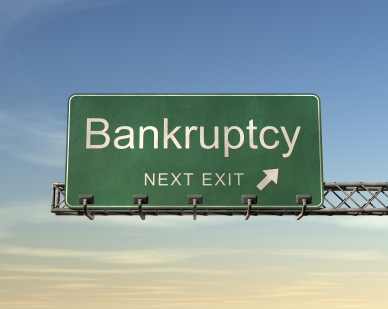
            According to a recent FOX news report, retirement these days doesn’t mean a time of leisure with no financial worries. An increasing number of Americans aged 65 and older are declaring bankruptcy, according to a recent study by John Pottow, professor of law at the University of Michigan Law School and an internationally recognized expert in the field of bankruptcy and commercial law. According to Pottow, those aged 65 and older represented seven percent of bankruptcy filers in 2007, an astonishing jump from 1991. He says they are the “fastest-growing age demographic."
            According to Pottow, the reason is mainly credit card debt.  Two-thirds of Americans who filed for bankruptcy said credit card debt was the cause of their financial problems, according to Pottow’s research. Filers aged 65 and over had more credit card debt compared to younger filers. “They’re using credit cards as a maladaptive coping mechanism,” Pottow says.
            Many seniors are attempting to live off a fixed income such as social security or a small pension. Many who thought they could live on their social security and savings are finding their medical expenses are significantly more than they anticipated. Still others have found the value of their investment portfolios drop because of the current economic crisis. Seniors are increasingly turning to credit cards as a means to supplement their income. 
            While filing for bankruptcy is very stressful for anyone, the jump in the number of seniors declaring bankruptcy is particularly distressing. I find it sad that so many are finding themselves in over their heads in what was supposed to have been their “golden years ."

Test your knowledge of bankruptcy here.

The results of last week’s poll are in. Fifty percent of readers say that their experience with debt collectors has been businesslike, while fifty percent of readers say they have never had an encounter with a debt collector.
Please vote in this week’s poll “Have any seniors in your family been stressed by severe financial problems?” The poll is located at the bottom of the right column.

This blog is prepared by a paralegal student as a class project, without compensation. The content of this blog contains my opinion, and is offered for personal interest without warranty of any kind. Comments posted by others on this blog are the responsibility of the posters of those messages. The reader is solely responsible for verifying the content of this blog and any linked information. Content, sources, information, and links will most likely change over time. The content of this blog may not be construed as legal, medical, business, or personal advice.
Monday, October 25, 2010

Debt Settlement--Is It Right for You?

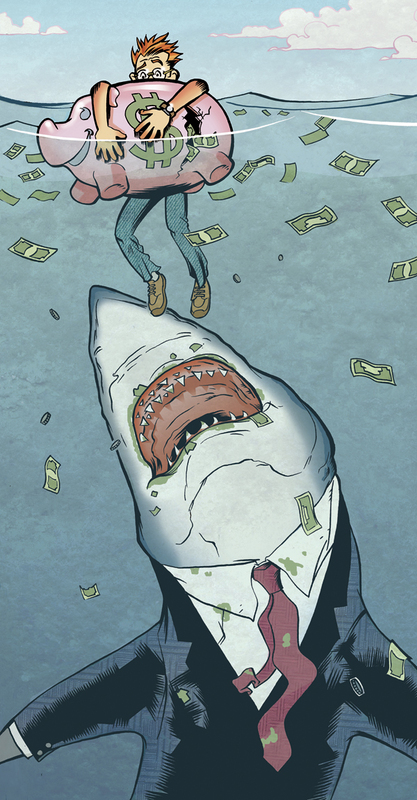
            You’ve probably seen the ads. Reduce your debt by 70%. Get out of debt in less than 12 months. An alternative to bankruptcy. Too good to be true? Probably. What are these ads talking about?
            They are talking about debt settlement, a program that promises to reduce your debt by negotiating with creditors. Sounds good, but the effect on your credit isn’t usually explained.
            Here’s the story about how debt settlement works. According to CreditCards.com, you call a debt settlement company and tell them about your situation. You give them the names of your creditors and the amount you owe to each one. The debt settlement company then gives you an estimate for reducing your debt along with a new, lower monthly payment. The debt settlement company advises you to stop paying your creditors and instead to send payments directly to them.
            The first payment you make goes directly into the debt settlement company's pocket. It's their fee for providing debt settlement services to you. The remaining payments go into an escrow account. Once the account has grown to a certain amount, the debt settlement company calls your creditors and begins negotiating a settlement with them.
            So far, so good. But remember the part about stopping payment to your creditors while a settlement is negotiated? That is where the trouble comes in.
            According to CreditCards.com, creditors don't typically settle debts until they're a few months past due. That means you have to stop paying your accounts for a few months. Meanwhile, your creditors report your late payments to the credit bureaus, your credit score drops, and you might begin receiving collection calls. You may even be sued.
           According to financial guru, Suze Orman, if the debt settlement company successfully settles with your creditors, the delinquent information usually isn't erased from your credit report. Instead, your account is updated as "Charged-Off Settled" Or "Paid-Settled", neither of which is as good as a "Paid in Full" account. After debt settlement, it may a few months or even a few years to be approved for unsecured credit.
            You could even owe taxes on settled debts. According to CreditCards.com., the Internal Revenue Service treats forgiven debts as income and expects you to pay income taxes on it. Creditors are supposed to send you a Form 1099-C for reporting cancelled debts. You must then report the debt on your tax return.
            According to Suze Orman, if you are current on your accounts, or even a few months months behind, and you want to maintain a good credit score, then debt settlement is not for you. She recommends settling directly with the credit card companies or collectors, or considering Consumer Credit Counseling Services (CCCS), which will allow you to enter into a debt management plan with your creditors. Usually CCCS will be able to reduce your monthly payment, and you will be able to pay your balance in full. As long as your payments continue to be made on time each month, consumer credit counseling does not hurt your credit. Thus a debt management program is far superior to debt settlement.
Click here to test your knowledge of strategies for getting out of debt.
There is still time to vote in the current poll located at the bottom of the right column.

This blog is prepared by a paralegal student as a class project, without compensation. The content of this blog contains my opinion, and is offered for personal interest without warranty of any kind. Comments posted by others on this blog are the responsibility of the posters of those messages. The reader is solely responsible for verifying the content of this blog and any linked information. Content, sources, information, and links will most likely change over time. The content of this blog may not be construed as legal, medical, business, or personal advice.

Monday, October 18, 2010

Everything You Have Always Wanted to Know (Or Not) About Collection Agencies

           Dealing with a debt collector has to be one of life's most stressful experiences. Harassing phone calls and  threats can drive you to the edge. What's worse, a collector may embarrass you by contacting your employer, family or neighbors. You may even be hounded to pay a debt that is not rightfully yours. While collection agencies have a job to do, there are limits on how far a debt collector can go.
            According to Creditcards.com, debt collectors are often hired by original creditors to collect an outstanding debt. However, at other times the original lender has written off your debt and has sold it to a collection agency for pennies on the dollar. These types of collection agencies are sometimes known as junk debt buyers. Because the original creditor has written off the debt, the original creditor can no longer help you. So called zombie debt collectors are debt collectors who attempt to collect after the stautute of limitations has expired on the debt.            
            According to the Fair Debt Collection Practices Act which applies to debt collection agencies but not original creditors, debt collectors may not make harassing telephone calls such as repeated calls to you while you are at work. They may only call between 8 a.m. and 9 p.m. on Monday through Saturday and on Sunday between 1 p.m. and 5 p.m. No calls are allowed on statutory holidays. Collection agencies may not contact third parties such as your friends, relatives, neighbors or employer for any information other than your address or telephone number.
            Creditcards.com suggests some things you can do if you are being harassed by a debt collector. First, make sure that the debt is your debt. You have a right to verification of the debt. Debt collectors must respond within 30 days of receiving your notice. Second, check the statute of limitations. There can be no legal action taken against you after the statute of limitations has run. Be aware that making a payment causes the statute of limitations to restart. This is why agents may ask you to make a small payment to avoid “further proceedings.” Third, you may ask the collection agency to cease communications. They will only be able to contact you to let you know that they are not pursuing your debt any more or that you are subject to legal action.
             You may often be able to negotiate with the collection agency. They can often reduce the amount owed by as much as 70% or more. This is especially true now as more and more consumers are falling being on their bills due to the bad economy. Here and here are some additional tips on dealing with debt collection agencies.
            Collectors can NOT threaten you in any way. If you feel harassed or threatened by a collection agency, file a complaint with Federal Trade Commission.

Test your knowledge of your debt collection rights here with this week’s quiz, “Do you know your debt collection rights?”

Be sure to vote in this week’s poll located at the bottom of the right hand column.  This week’s topic is “What phrase best describes your experience with debt collectors?”

Results of last week’s poll are in. Sixty percent of readers said that restrictions on credit card use for young adults between the ages of 18 and 21 should depend on the situation. Forty percent said that restrictions on credit card use for young adults between the ages of 18 and 21 should be unqualified.

This blog is prepared by a paralegal student as a class project, without compensation. The content of this blog contains my opinion, and is offered for personal interest without warranty of any kind. Comments posted by others on this blog are the responsibility of the posters of those messages. The reader is solely responsible for verifying the content of this blog and any linked information. Content, sources, information, and links will most likely change over time. The content of this blog may not be construed as legal, medical, business, or personal advice.
Monday, October 11, 2010

Student Loans in the News


The federal student loan program has received much press lately. On March 30, 2010, Congress passed the budget reconciliation bill. One of this bill’s provisions was to end the practice of subsidizing banks to originate student loans that are guaranteed by the federal government. Effective July 1 of this year, the federal government began issuing all student loans.  According to the Century Foundation, a nonprofit public policy research institution, the expected savings is reported to be around $6 billion per year. This savings will be used to increase Pell Grants and to assist historically black and community colleges.
             Student loans were again in the news in August of this year when the U.S. Government Accountability Office (GAO) issued a report about deceptive and questionable marketing practices at for-profit or “proprietary” schools. The GAO sent undercover investigators to 15 schools. According to CNNmoney.com, investigators found that four of the schools investigated encouraged applicants to commit outright fraud. One school encouraged applicants to falsely claim underage dependents in order to qualify for Pell grants and student loans. The report found that students at for-profit colleges are more than twice as likely to default on their student loans than students from public or non-profit colleges. Only about 8 percent of all students attend for-profit or “proprietary” schools, but they command about 25 percent of federal loan funds and are responsible for about 40 percent of defaulted loans.
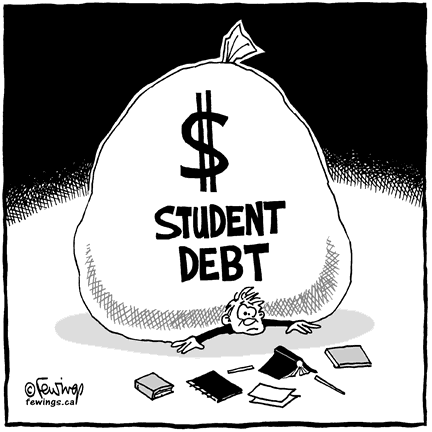
             According to the U.S. Department of Education, nearly three-quarters of students who default on their loans do so after withdrawing from school and failing to complete their studies. This is significant because only approximately 27 percent of for-profit college students and only 26 percent of community college students emerge with an associate degree after six years.  Students who fail to graduate are often faced with a crippling loan burden that cannot be discharged in bankruptcy. At one time, efforts to collect defaulted student loans had a 10 year limit. Congress has recently done away with this limit. This means unpaid student debt will plague you for the rest of your life. In a 2005 case, Lockhart v. United States, the Supreme Court ruled that the federal government could seize social security benefits to cover outstanding student loans.
            So what is a student to do? In my case, I have decided to keep my student loan burden low enough so that if I do not get a job in the paralegal field when I graduate, I will still be able to make my student loan payments with my current salary.  I have decided to work more and borrow less. Every situation is different, but using caution when taking out student loans is advisable.
            What if  you can’t make your payments when  you graduate? Fortunately, there are several options, such as changing your repayment plan, requesting a deferment, or requesting forbearance.  For more information, click here.

Find out here how much you owe on your student loans and what your projected monthly payment will be.

Test your knowledge of student loans here and here and here.

There is still time to vote in last week's poll (bottom of right column).


This blog is prepared by a paralegal student as a class project, without compensation. The content of this blog contains my opinion, and is offered for personal interest without warranty of any kind. Comments posted by others on this blog are the responsibility of the posters of those messages. The reader is solely responsible for verifying the content of this blog and any linked information. Content, sources, information, and links will most likely change over time. The content of this blog may not be construed as legal, medical, business, or personal advice.


Monday, October 4, 2010

Students and Credit Cards - An Unhealthy Combination?

          Your first credit card--it's a rite of passage to adulthood. However, new findings show that young consumers might not be ready for the responsibility that comes with a credit card.  A new survey from National Jumpstart, a group that measures financial literacy among students, found that financial literacy among high school students had fallen to its lowest levels ever. A 2009 study from Sallie Mae found that 84 percent of college undergraduates had at least one credit card, up from 76 percent in 2004.  This increase in credit card use has seen a corresponding rise in credit card debt for young consumers.  The study showed that college seniors graduated with credit card debt of around $4100 an increase of over $2000 from 2004.  In addition, it was found that close to 20 percent of college seniors had balances of greater than $7000.  
         The Credit Card Accountability Responsibility and Disclosure Act (Credit CARD Act), that recently went into effect, focuses on these issues. Provisions in the bill address  co-signer requirements and  marketing techniques, such as free t-shirt or pizza giveaways,  aimed at college students and campuses. Under the Credit CARD Act, consumers under the age of 21 must show proof of income in order to get around the co-signer requirement. However, according to a recent ABC News segment, banks are finding ways to get around that requirement. ABC found that a few banks allowed students to co-sign for other students. Some banks even allowed students to count their student loan disbursements as income.
            Nevertheless, there is good news. Under the Credit CARD Act, colleges and universities now have to disclose their dealings with credit card companies. Banks also have to disclose their deals with schools and file annual reports to the Federal Reserve Board.

How much does your dream life really cost? Get a “reality check” with this week’s quiz here. 

Results of the first reader poll are in: The results were evenly split with 50 percent of readers saying that  they suffer from debt-related stress and 40 percent of readers saying  that debt is not a stressor in their lives. Please vote in this week’s poll (bottom of right column): Should access to credit cards be restricted for students between the ages of 18 and 21?

This blog is prepared by a paralegal student as a class project, without compensation. The content of this blog contains my opinion, and is offered for personal interest without warranty of any kind. Comments posted by others on this blog are the responsibility of the posters of those messages. The reader is solely responsible for verifying the content of this blog and any linked information. Content, sources, information, and links will most likely change over time. The content of this blog may not be construed as legal, medical, business, or personal advice.